Beam Bridges
(also known as girder bridges)
![[Pedestrians - yes, road - yes, rail - yes]](images/fcr.gif)
Beam bridges are the simplest type of bridge. The first bridges would probably be just a fallen tree trunk.
Single slabs of stone are also simple beam bridges and are called clam bridges.
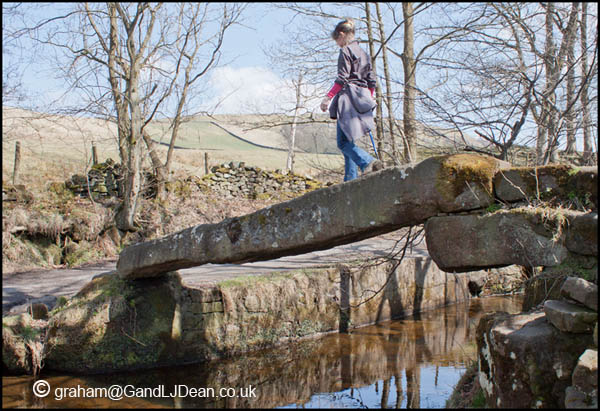
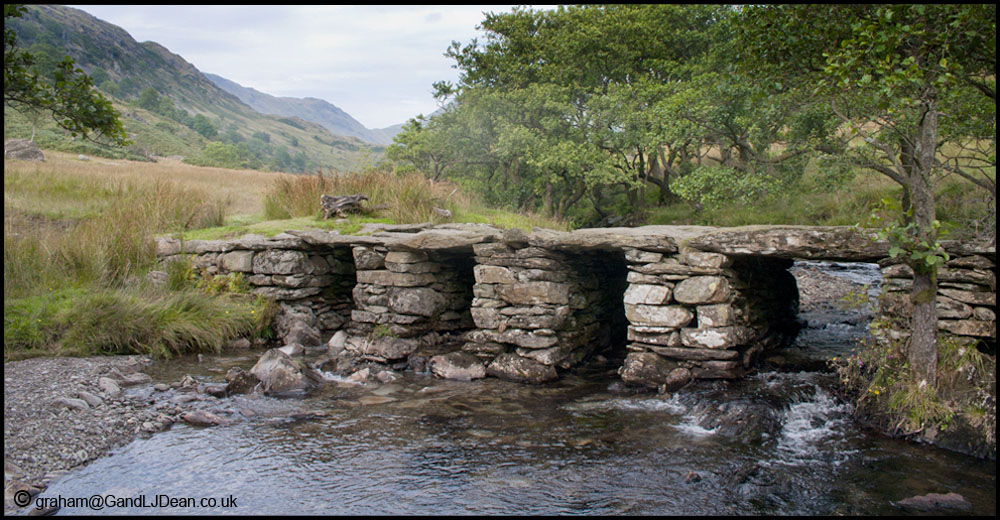
Where the river was too wide to be spanned by one stone slab, piles of stones (called piers) were
built to support more slabs. These are clapper bridges.
Advantages of beam bridges
- Good for short spans.
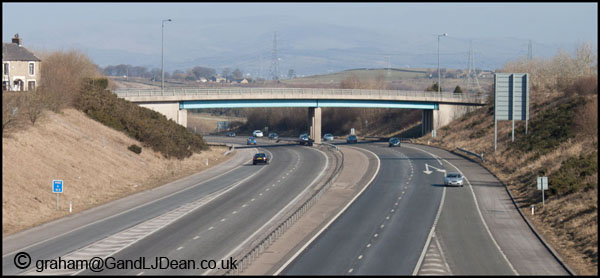
- Wide distances can be spanned by resting beams on piers.
Disadvantages of beam bridges:
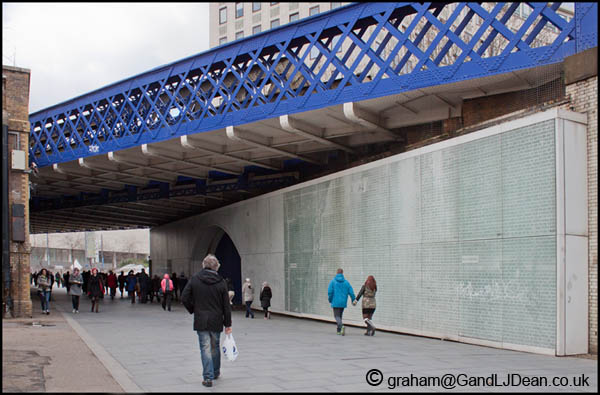
- Can be expensive, even for fairly short spans. A cheap material for beam bridges is concrete. However concrete on its own is not strong enough to stand up to high forces of tension (pulling). Concrete needs to be reinforced with expensive steel mesh.
- Very expensive for long spans, because piers have to be built.
- It is not always possible to build support piers.
Purchase Bridges, Tunnels, Fords and Ferries Kindle book from Amazon.